She lowered her voice.
“You could have handled that differently.”
The officer’s expression tightened.
“So could you.”
Carter looked away.
Although she wanted to blame the officer for the public humiliation, she knew she had been the one who demanded the arrest. She had pointed at Hale, accused him of belonging somewhere he did not, and encouraged the officer to act before the facts were clear.
Nevertheless, accepting responsibility felt far more difficult than assigning blame.
“I was protecting the building,” she insisted.
“Then the proper response was to verify the situation,” the officer said. “Not to turn an unconfirmed suspicion into a confrontation.”
His words left her with nothing to say.
At the far end of the lobby, the elevator doors closed behind Hale and his companions.
Carter watched the descending floor numbers on the display.
A few minutes earlier, she had imagined that she was about to teach a stranger a lesson.
Instead, she had given everyone in the building a reason to question her judgment.
And the consequences were only beginning.
Chapter 6: The Meeting Upstairs
A Different Kind of Authority
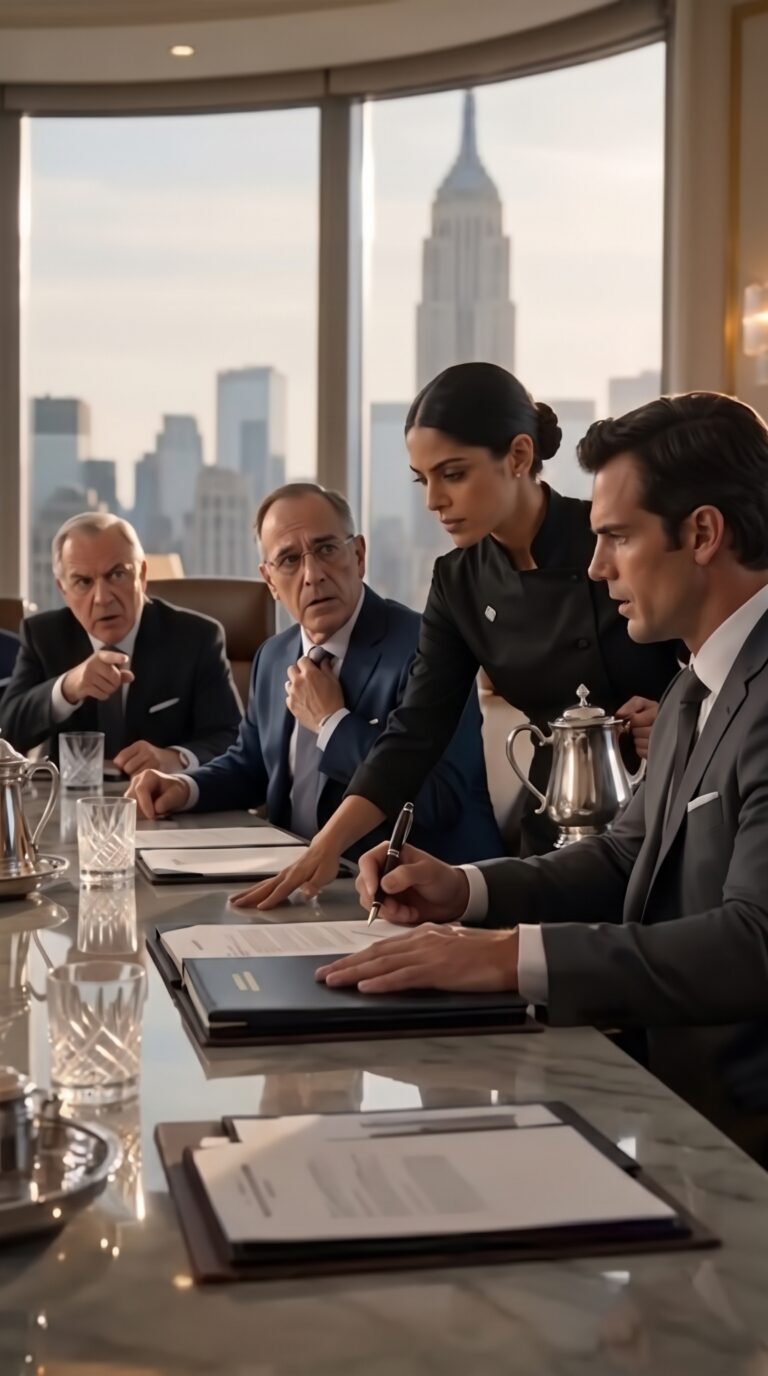
Several floors above the lobby, Hale stepped into a quiet conference room overlooking the city.
Sunlight poured through the floor-to-ceiling windows, illuminating a long walnut table and a row of leather chairs. Unlike the public lobby, the room offered no audience and no opportunity for spectacle.
The older executive placed his briefcase on the table.
“Your Honor, I sincerely apologize for what happened downstairs.”
Hale removed his sunglasses and set them beside his phone.
“An apology is appreciated,” he replied. “But I would like to know why the receptionist believed she could act that way without consequence.”
The executive took a seat.
“The board has been investigating complaints about the visitor management process. Ms. Carter had been warned about several incidents involving guests and business partners.”
“Then why was she still in that position?”
“Because the board wanted to review the evidence before making a final decision.”
Hale leaned back.
“That’s reasonable. But allowing someone to remain in a position of responsibility also means ensuring that person understands the limits of that responsibility.”
The executive nodded.
“Agreed.”
For a moment, neither man spoke.
Then Hale looked toward the city beyond the windows.
“What happened today should not become an excuse for people to assume that every difficult employee is acting maliciously. We need the facts, the records, and a fair process.”
The executive seemed relieved by the response.
“That’s exactly why the board requested your involvement.”
The Lesson Behind the Incident
Hale opened the folder the executive had brought upstairs.
Inside were incident summaries, written complaints, and records of previous meetings. He reviewed them carefully, making occasional notes in the margins.