“Not enough yet.”
Chapter 4: The Cowboy’s Hidden Past
A Man Who Had Always Ridden Alone
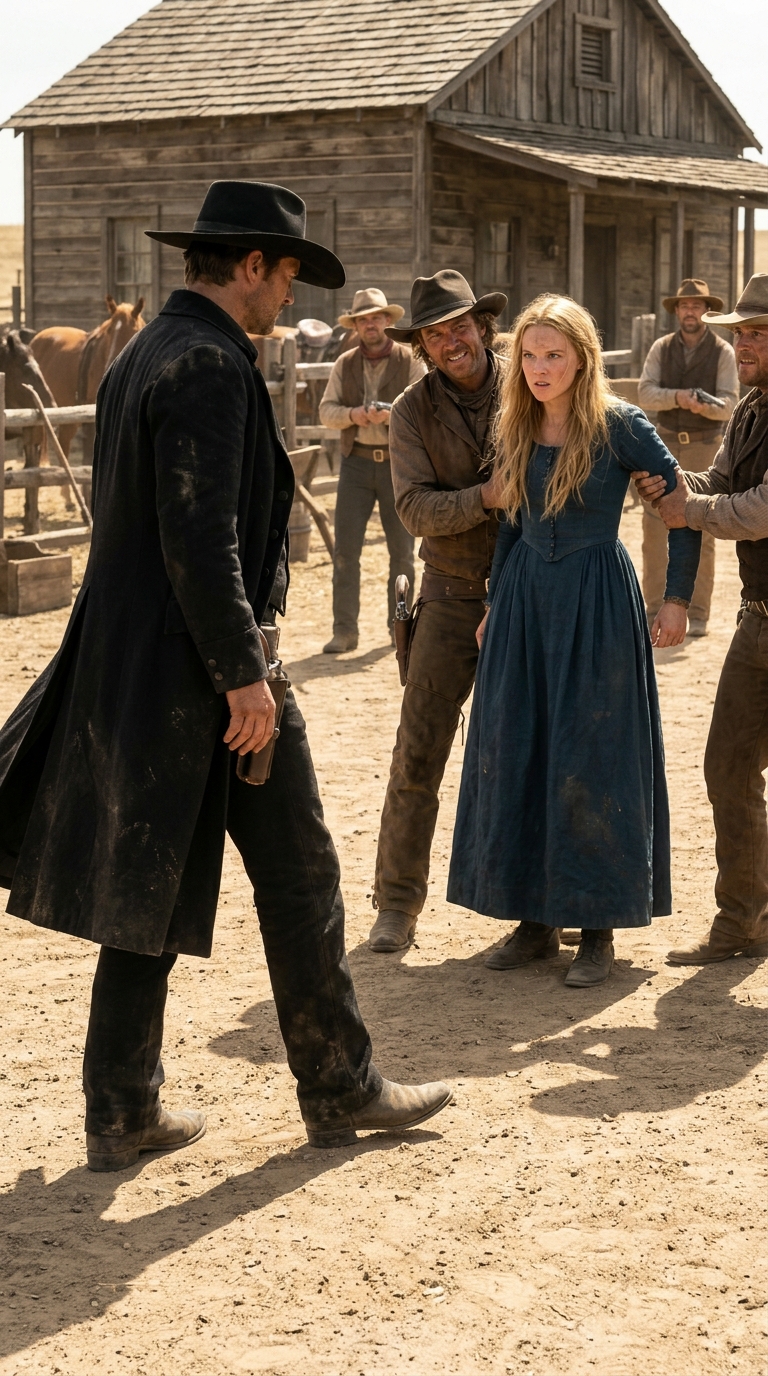
As the afternoon wore on, the cowboy found himself thinking about the question he had been avoiding.
He had spent much of his adult life riding alone. After losing people he cared about, he had convinced himself that independence was safer than attachment. A man traveling alone had nobody to disappoint, nobody to endanger, and nobody whose grief he would have to carry if trouble came.
Consequently, he had learned to treat relationships like temporary arrangements. He could share a campfire, exchange stories, and even protect a stranger from danger. However, the moment someone expected him to stay, he usually found a reason to leave.
The woman at the front seemed to recognize his discomfort.
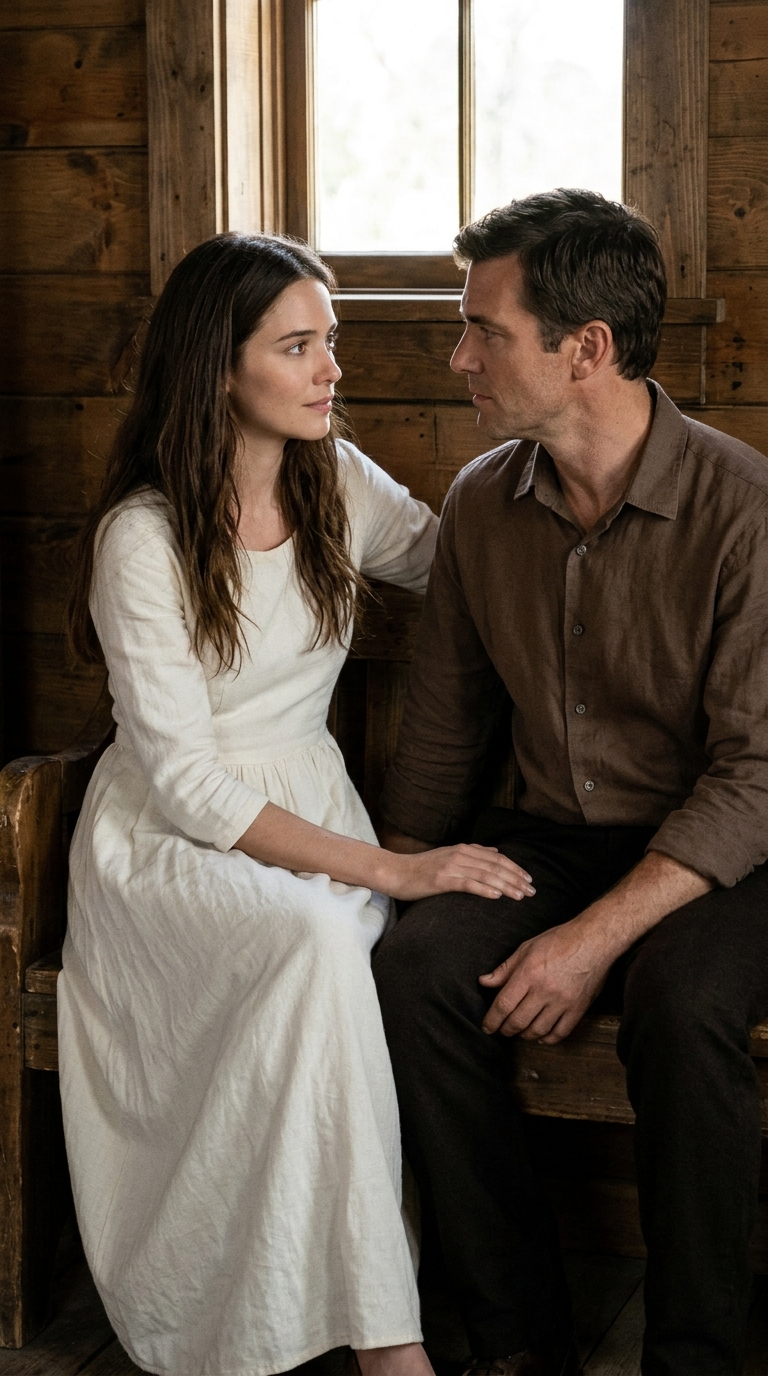
“You asked why you should choose a wife from a line of strangers,” she said. “Perhaps the better question is whether you know how to let anyone stand beside you.”
His jaw tightened.
“You don’t know anything about me.”
“That’s true. But you have spent the entire afternoon explaining why you cannot trust this situation. You haven’t once explained what you are willing to offer another person.”
The words struck a nerve.
For a moment, he considered putting on his hat, mounting his horse, and riding away. That would have been easy. He had left harder situations behind without looking back.
Yet something kept him standing there.
The Price of Being Strong
“My wife died years ago,” he finally said.
The camp grew quieter.
He looked down at the dust around his boots as he continued. He did not offer a long account of the tragedy, nor did he ask anyone to pity him. Instead, he explained that after her death, he had made a promise never to build his life around another person again.
“Every time I cared about someone, I eventually lost them,” he said. “After a while, riding alone seemed like the only sensible choice.”
The woman listened without interrupting.
“I’m sorry for your loss,” she replied. “But grief doesn’t give you the right to decide what another woman should be willing to endure.”
He looked up sharply.
“I never said it did.”
“No. You said choosing a wife sounded like choosing a horse. Perhaps that is because you understand how to care for something you own, but you fear what happens when you love someone you cannot control.”
The accusation was painful because it was not entirely wrong.
For the first time, the cowboy understood that his objection had never been only about the strangeness of the offer. He had been searching for a reason to reject the possibility before it could reject him.
The woman stepped back, allowing him room to consider her words.