She was judged before she could speak. What the sales associate failed to realize was that appearances can be deceiving—and arrogance can cost far more than a diamond.
Chapter 1: The Woman Who Didn’t Belong
An Unwelcome Request
“I’d like to see the collection in the back.”
The request was simple, polite, and delivered with quiet confidence. Nevertheless, the woman standing beside the diamond display received a look that suggested she had asked for something outrageous.
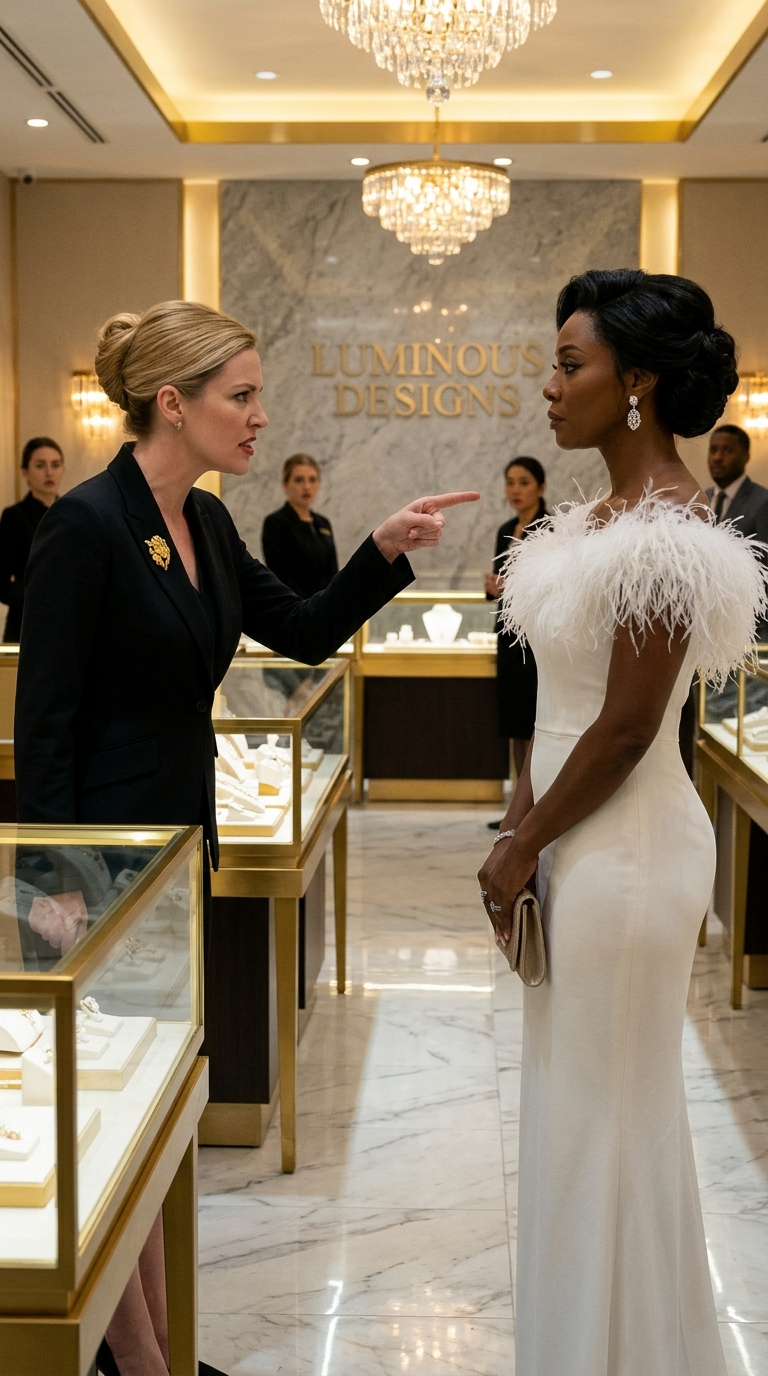
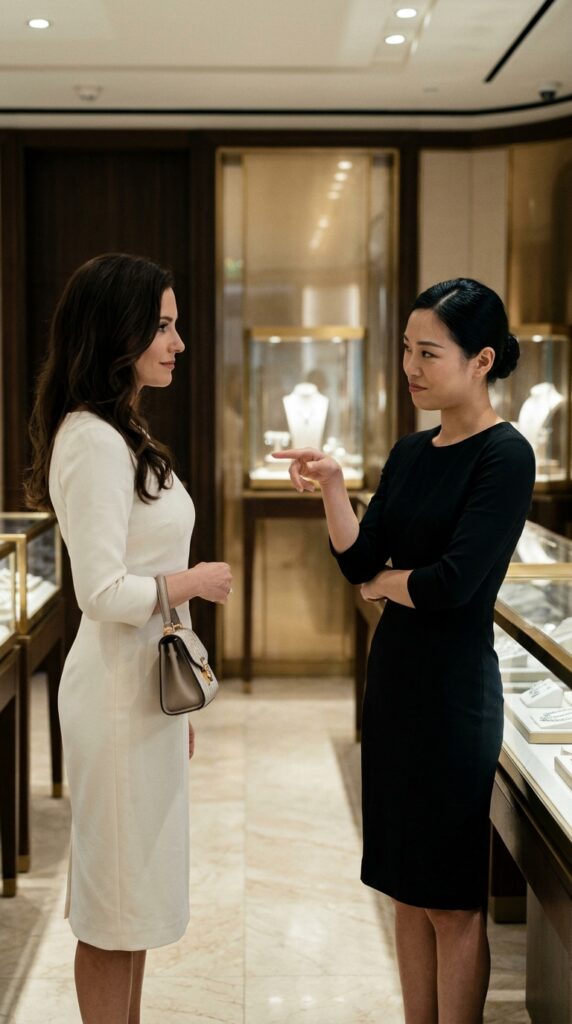
Inside one of Manhattan’s most exclusive jewelry boutiques, everything gleamed beneath warm champagne-colored lights. Diamonds sparkled behind spotless glass counters, while polished marble floors reflected the elegant gold fixtures overhead. Beyond the main showroom, a private room displayed the boutique’s rarest and most expensive pieces.
The woman in white stood out without trying. Her tailored white dress complemented her deep brown skin, while delicate diamond earrings added a subtle touch of elegance. Her black hair was neatly styled, and her posture conveyed the kind of confidence that required no announcement.
Across the counter, a sales associate dressed in black adjusted her pristine white gloves. Her hair was pulled into a tight bun, and her carefully maintained smile barely concealed her skepticism.
“The collection in the back?” the associate repeated.
“Yes, please,” the customer replied. “I’d like to take a closer look.”
For a moment, the associate studied her from head to toe. Instead of asking what interested her, she glanced toward the private room and then back at the customer.
Meanwhile, a security guard in a charcoal suit stood several feet away, watching the exchange without speaking.
The First Judgment
“That room is for VIP clients,” the associate said coolly, “not walk-ins with no purchase history.”
Her words carried farther than she probably intended. A customer examining a necklace nearby looked up, while another person paused beside a display of diamond bracelets.
The woman in white blinked once. Although the rejection was unmistakable, she did not raise her voice or retreat from the counter.
“I’m sorry,” she said evenly. “Have we met before?”
The associate frowned. “I don’t believe so.”
“Then how do you know I have no purchase history here?”
For the first time, the sales associate seemed slightly uncomfortable. However, she quickly recovered, lifting her chin as if the question itself had challenged her authority.
“It’s standard procedure,” she replied.
The customer glanced toward the private room again. Its doors remained open, revealing velvet-lined displays and a chandelier that scattered tiny reflections across the walls.
“Is it standard procedure to refuse customers before asking what they’re interested in buying?”
The associate’s smile disappeared.
“No,” she answered. “But we do have standards.”
The distinction was deliberate. So was the contempt behind it.