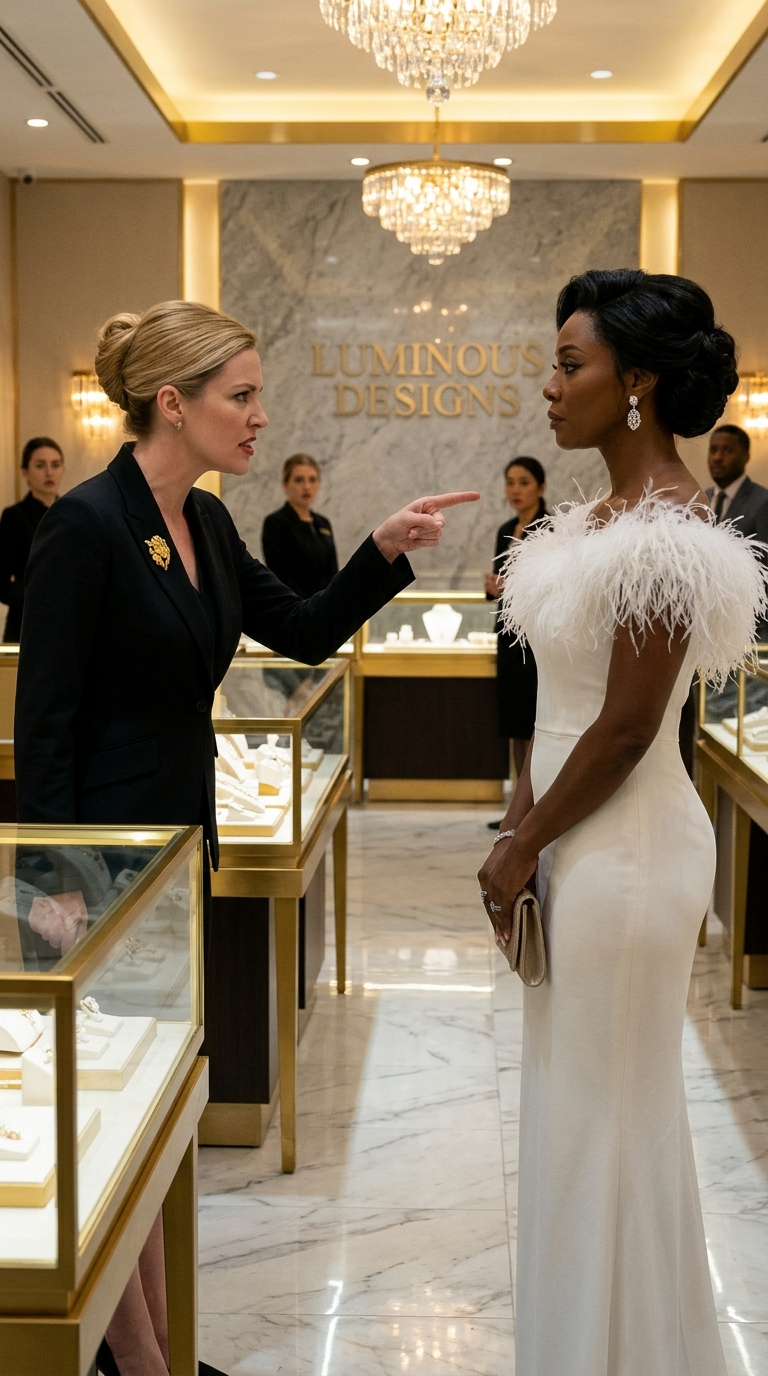
Instead, the customer continued to stand exactly where she was.
Consequently, the employee could no longer pretend the interaction was over.
Chapter 3: Behind the Perfect Smile
When Courtesy Becomes Contempt
“Look,” the associate said, lowering her voice, “we serve a very particular clientele. Our customers expect a certain atmosphere.”
The woman in white studied her face.
“What atmosphere would that be?”
“Privacy. Discretion. Exclusivity.”
“Those sound like reasonable expectations.”
“Exactly,” the associate replied, apparently relieved that the customer seemed to understand.
“However,” the woman continued, “none of them requires you to judge someone by her appearance.”
The associate’s expression hardened.
“I never said anything about your appearance.”
“You didn’t have to.”
Silence settled over the counter.
The words were neither loud nor dramatic. Nevertheless, they carried enough weight to make the nearby customers turn their attention toward the exchange.
The woman in white had experienced the difference between being welcomed and merely tolerated in places where people assumed they knew her worth before learning her name. She had learned that prejudice did not always announce itself through insults. Sometimes, it arrived dressed in impeccable manners.
A smile could conceal it. So could a policy selectively applied.
Still, she refused to let anger dictate her response.
“I came here because I admired your collection,” she said. “I expected someone to show me the pieces and explain their craftsmanship.”
“That is what we do,” the associate insisted.
“Then why haven’t you done it?”
The employee opened her mouth, but no convincing answer followed.
Meanwhile, the guard glanced toward the private room. Its displays remained illuminated, and several extraordinary pieces sat beneath protective glass. Nothing about the room suggested that a customer’s initial request should provoke such hostility.
An Audience She Didn’t Expect
The newcomer near the entrance approached the display of gold pendants but continued listening.
“Perhaps another associate could assist you,” the security guard suggested.
“No,” the woman in white said calmly. “I’d like to understand why this associate believes I shouldn’t enter that room.”
The employee gave a short, incredulous laugh.
“Because access isn’t automatic. This isn’t an ordinary jewelry store.”
“I can see that.”
“Then you understand why we must be selective.”
“Selective about customers’ needs, or selective about their appearance?”
The associate’s cheeks colored slightly.
“That is an unfair accusation.”
“Then show me the policy.”
Again, the employee hesitated.
For a moment, the woman in white wondered whether the associate realized how easily the conversation could have been avoided. A simple question about the customer’s interests would have been enough to begin a professional interaction.
Instead, every response had made the situation worse.
The security guard cleared his throat.
“If there’s a written policy, we can review it.”